Table of contents
Is your Aurora backyard turning into a swamp after every rainstorm? You're not alone. Poor drainage is one of the most common — and potentially damaging — landscaping issues facing homeowners in the Western Chicago suburbs. Left unchecked, standing water can destroy your lawn, damage your home's foundation, and turn your outdoor space into an unusable mess.
If you've noticed persistent puddles, soggy spots that never seem to dry, or worse — water seeping into your basement — this guide will help you identify, understand, and solve your drainage problems once and for all.
The Hidden Dangers of Poor Drainage in Aurora
Before diving into solutions, it's worth understanding why addressing drainage issues should be a priority. What seems like a minor inconvenience can quickly escalate into major property damage.
Foundation Damage Risks
Water pooling near your foundation is a ticking time bomb. In Aurora's heavy clay soil, water doesn't absorb quickly. Instead it sits against your foundation, seeping into tiny cracks that expand during our harsh freeze-thaw cycles. Over time this can lead to basement flooding and water damage, foundation cracks and settling, mold and mildew growth, and structural instability requiring repairs that cost $10,000 or more.
Landscape Destruction
Your carefully cultivated landscape can't survive in waterlogged conditions. Excessive moisture leads to root rot in trees and shrubs, dead patches in your lawn, erosion that washes away valuable topsoil, and plant diseases that spread rapidly in wet conditions.
Mosquito Breeding Grounds
Standing water creates ideal breeding conditions for mosquitoes. Just one tablespoon of stagnant water can produce hundreds of mosquitoes in a week, turning your backyard into an uncomfortable — and potentially unhealthy — environment.
Why Aurora Homes Face Unique Drainage Challenges
Understanding Aurora's specific conditions helps explain why drainage problems are so prevalent here, and why generic solutions often fail.
Heavy clay soil. Aurora sits on some of the densest clay soil in Illinois. Unlike sandy or loamy soils that let water percolate through, our clay has tiny, tightly packed particles that resist absorption. When clay saturates it expands; when it dries it contracts and cracks. That constant movement can create uneven surfaces, damage hardscaping like patios and walkways, and redirect water in unexpected ways.
Rapid weather changes. Aurora's weather can shift dramatically — from torrential spring rains to summer droughts, often within the same week. Your drainage system has to handle both extremes. A system designed only for average conditions will fail during the 3-inch downpours that seem increasingly common.
Urban development. As Aurora grows, more impervious surfaces — roofs, driveways, streets — prevent natural absorption. That concentrated runoff often ends up in residential yards, overwhelming systems that worked fine decades ago.
Identifying Drainage Problems: Warning Signs
Early detection can save thousands in repair costs. Here's what to watch for.
Standing water after rain. If water remains in your yard more than 24 to 48 hours after rainfall, you have a drainage problem. Pay attention to low spots where water collects, areas along your foundation, and spaces between your home and paved surfaces.
Soggy spots that never dry. Some areas stay perpetually damp even during dry spells, often indicating underground springs or a high water table, broken irrigation lines, or improper grading.
Water in the basement. This is the most serious warning sign. Damp walls or floors after rain, white mineral deposits (efflorescence) on basement walls, musty odors, or visible entry points all mean your drainage system has already failed — take immediate action.
Erosion patterns. Look for exposed tree roots, gullies or channels forming in your lawn, mulch washing out of beds, and soil deposits on walkways or driveways.
Dying plants in wet areas. Most landscape plants suffer in waterlogged soil. Watch for yellowing leaves (not from nutrient deficiency), soft, blackened roots, stunted growth, and fungal growth on stems or leaves.
DIY Drainage Assessment
Before calling a professional, these simple tests help you understand your drainage issues.
Soil percolation test. Dig a hole 12 inches deep and 6 inches wide, fill it with water and let it drain completely, then fill it again and time how long it takes to drain. If water remains after 24 hours, you have severe drainage issues.
Water flow patterns. During the next rainfall, observe where water flows, note where it pools or moves slowly, check where your downspouts discharge, look for sheet flow across the lawn, and document it with photos for a professional consultation.
Downspout placement. Your downspouts might be the culprit. They should extend at least 6 feet from the foundation, direct water away from the house, and never dump into planting beds against the foundation.
Professional Drainage Solutions for Aurora Yards
When DIY fixes aren't enough, these professional solutions can permanently resolve your drainage issues.
French Drains
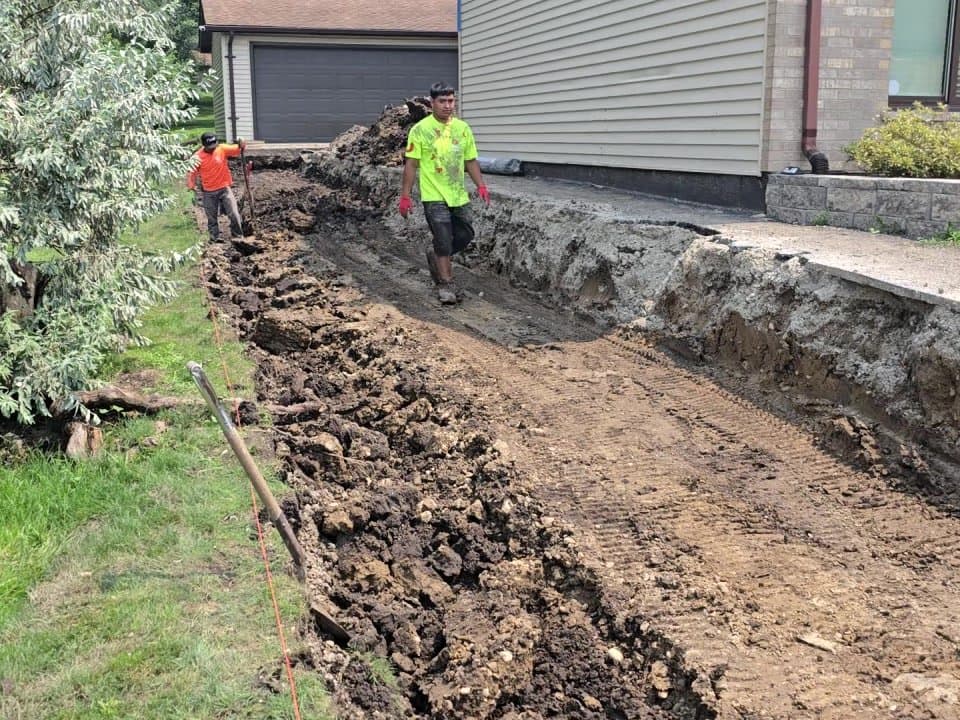
The gold standard for yard drainage — perforated pipe surrounded by gravel that collects and redirects water. Ideal for persistent wet spots, protecting foundations, and intercepting hillside runoff. Water enters through the gravel, flows into the pipe, and is carried away to a safe discharge point. Typical cost: $25 to $50 per linear foot installed.
Dry Wells
Underground structures that collect water from multiple sources and let it slowly percolate into the surrounding soil. Perfect for areas where French drains can't discharge, collecting downspout water, and managing localized flooding. Typical cost: $1,500 to $4,000 per well.
Channel Drains
Also called trench drains, these linear drains collect sheet flow across paved surfaces. Ideal for driveways that slope toward garages, patios with poor drainage, and transitions between lawn and hardscaping. A narrow trench with a grated top collects surface water and channels it to drainage pipes. Typical cost: $30 to $100 per linear foot.
Grading and Resloping
Sometimes the simplest solution is reshaping your yard to promote proper water flow — creating a 2 percent slope away from structures, eliminating low spots, building berms to redirect water, and establishing proper swales. Typical cost: $1,000 to $5,000 depending on yard size.
Rain Gardens
An eco-friendly solution that manages water while beautifying your landscape. These shallow depressions are planted with water-tolerant natives that capture runoff, filter pollutants, support local wildlife, and recharge groundwater. Typical cost: $3 to $30 per square foot.
Choosing the Right Solution
French drains offer excellent foundation protection with low maintenance and a 20-to-30-year lifespan. Dry wells suit isolated low spots. Channel drains excel on paved surfaces. Regrading fixes overall yard drainage permanently. Rain gardens provide eco-friendly management with an indefinite lifespan. The right choice depends on where your water collects, where it can safely go, and your budget — which is exactly what a professional assessment determines.
Case Study: An Aurora Backyard Transformation
One Aurora family faced severe drainage issues — their backyard stayed soggy for days after rain, killing the lawn and making the space unusable, with water beginning to seep into the basement during heavy storms.
After a thorough assessment, we installed 150 feet of French drain along the back of the property, regraded the yard for proper slope away from the house, extended the downspouts and connected them to the drainage system, and created a rain garden in the lowest corner to handle overflow.
The result: the yard now drains within hours of rainfall, the basement stays completely dry, the lawn has recovered, and the rain garden adds beauty while managing excess water — a total investment of $8,500, compared to potential foundation repairs of $15,000 or more.
Preventing Future Drainage Problems
Once you've solved existing issues, maintain good drainage with regular upkeep: clean gutters twice yearly, check downspout extensions seasonally, monitor for new low spots, and keep drainage inlets clear of debris. Landscape smartly with native plants, avoid compacting soil with heavy equipment, keep mulch off your foundation, and consider permeable hardscaping for new projects. Each spring, walk your property during rain to observe water flow, check foundation grading, test sump pumps before wet seasons, and document any changes.
When to Call a Professional
While some drainage issues can be DIY projects, call experts when you notice water entering your basement, large areas of standing water lasting over 48 hours, erosion threatening structures or trees, multiple problem areas requiring comprehensive solutions, or any drainage issue affecting your foundation. Professional assessment ensures you address root causes, not just symptoms — protecting your largest investment, your home.
Protect Your Property Today
Don't let drainage problems destroy your yard or damage your home. At Sunset Services, we've spent 25-plus years solving Aurora's toughest drainage challenges with an approach that addresses not just the water you see, but the underlying issues causing it. Every day you wait, water continues its destructive work — so it's worth acting before the next big storm.